
Sara Sabry
Engineer & Space Pioneer
defying limits
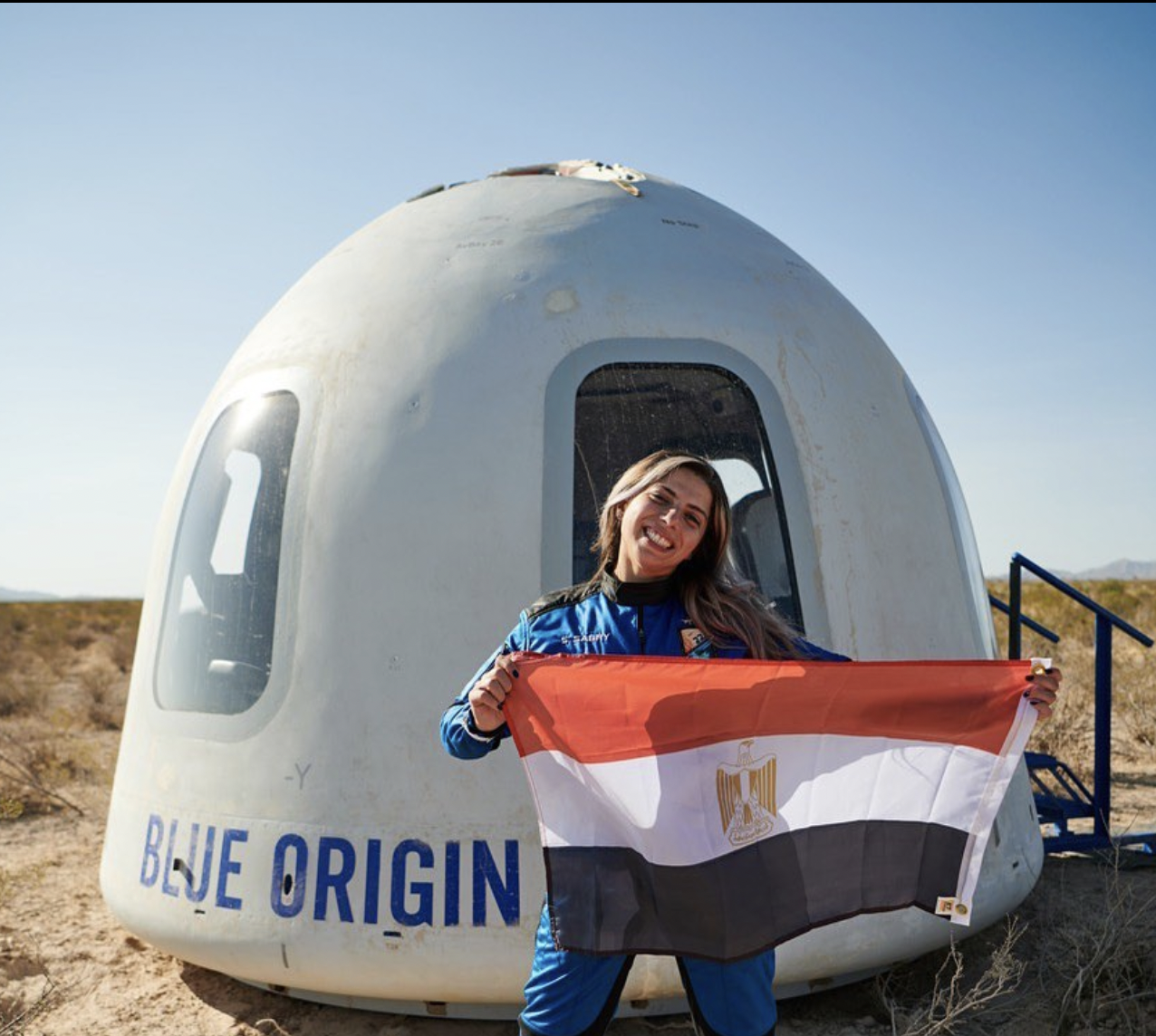
Sara Sabry is known for her groundbreaking achievement as the first Egyptian, Arab woman, and African woman to go to space. She is also the founder and executive director of Deep Space Initiative (DSI), a non-profit organization dedicated to increasing accessibility and opportunity in the space field. As a Ph.D. student in Aerospace Sciences, Sabry conducts research on engineering the next-generation of planetary space suits at the NASA-funded Humanspaceflight lab at UND. Her diverse background spans Mechatronics, Robotic Surgery, Stem Cell Development, Augmented Reality, Formula 3 Car design, and Bioastronautics. Her humanitarian efforts include grassroots projects empowering women in Uganda, teaching in South Africa, and marine conservation in Madagascar—all fueling her commitment to the fight for human rights and social justice.


Through Deep Space Initiative (DSI), I’ve built programs that democratize access to space research and education. These efforts have empowered individuals globally, regardless of their resources, to participate in shaping humanity’s future. By integrating diverse perspectives, we foster innovative approaches to humanity’s most pressing challenges, from advancing STEM education to addressing climate change through space-based technology.
Witnessing Earth from space profoundly shifted my perspective. The Overview Effect underscored our interconnectedness and the fragility of our planet. This realization fuels my mission to harness space exploration as a tool to unite humanity. My hope is that future explorers will continue this legacy, ensuring exploration uplifts all of humanity rather than a privileged few. My work bridges technical exploration with human progress and opens doors for underrepresented groups to contribute and dream, creating a path toward a more inclusive, equitable future—both in space and on Earth.


“This journey wasn’t about escaping Earth but understanding it—and taking everyone along for the ride.”

Growing up in Egypt, space exploration seemed as distant as the stars themselves. I didn’t grow up watching rocket launches or astronauts on TV. My path started from a deep curiosity and an existential longing to understand humanity’s place in the universe. After earning degrees in Mechanical and Biomedical Engineering, I delved into cutting-edge research in bioastronautics, robotics, and augmented reality. Yet my trajectory shifted during my master’s in Biomedical Engineering when I discovered astrophysics. It was a revelation: space exploration wasn’t just science—it was humanity’s next step.
Picturing myself on a rocket every night became my anchor. Space wasn’t just a goal—it was a purpose. When I underwent private astronaut training, every hardship and “no” I’d heard growing up suddenly made sense. This journey wasn’t about escaping Earth but understanding it—and taking everyone along for the ride.
Since returning, I’ve infused this perspective into every aspect of my work. At the Deep Space Initiative, we develop programs aimed at solving Earth’s challenges through space exploration. From creating accessible space education platforms to innovating sustainable technologies, every effort is guided by the lessons of that moment.



LEARN MORE ABOUT THE CLASS OF 2025