
Salima Ikram
Egyptologist
Unity through exploration of the past
Salima Ikram is a Distinguished Professor of Egyptology at the American University in Cairo and Research Fellow at the Smithsonian’s Natural History Museum. She has worked as an archaeologist in Egypt, Turkey and Sudan, and in museums in Egypt, Europe, and the USA. She co-directed the Predynastic Gallery project and the North Kharga Oasis Survey, and directs the Animal Mummy Project, the North Kharga Oasis Darb Ain Amur Survey, and the Amenmesses Project-KV10/KV63 in the Valley of the Kings. A member of the American Academy of Arts and Sciences, she has published in both scholarly and popular venues for all ages on diverse subjects, ranging from traditional Egyptology to zooarchaeology. Currently, her research focuses on climate and biodiversity changes in Egypt, rock art, ancient Egyptian foodways, mummification, and heritage protection.
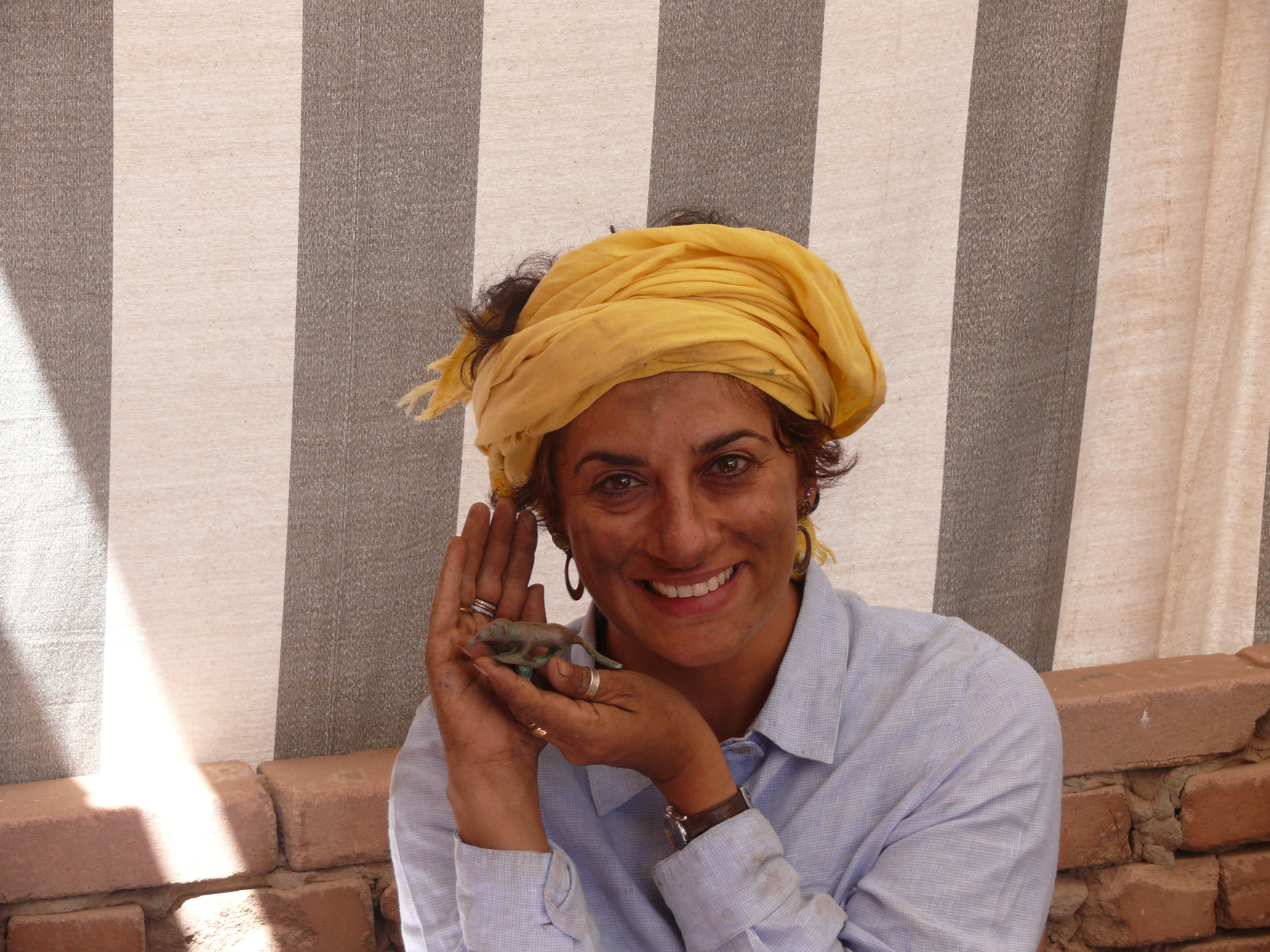

Exploration, excavation, and discovering new archaeological sites and information are always the most fun parts of my job. Being the first person to enter a tomb in 2400 years and to smell the incense left behind by the funerary priests is magical and special, as is opening up a series of jars that have been sealed for over 3350 years and discovering the components of a royal mummification. The most meaningful and enduring aspect of my work is sharing the knowledge that I have acquired through my expeditions and research, and inspiring others to learn about the ancient world.
My research has multiple elements. The archaeological exploration of Egypt’s unchartered western desert in the area of Kharga Oasis has led to the discovery of over 160 new sites that provide evidence of how humans exploited the area over a period of 10,000 years. This has helped to document climate change in the area, which is a topic of increasing importance. Excavations in the Valley of the Kings have yielded fresh data on obscure pharaohs and times of civil unrest in Egypt, and the discovery of a new tomb/embalming cache (KV63). This contributes to our understanding of Egyptian history around Tutankhamun’s troubled reign, and has shed fresh light on mummification techniques.


“[Knowing about the past] provides us with a link to our shared humanity, creativity and history.”

My studies on mummies and my archaeozoological research have contributed significantly to the establishment of bioarchaeology in Egypt. This, I hope, will lead to fully integrating bioarchaeology into Egyptian archaeology and to the training of specialists to extract information about ancient Egypt from all available sources of bio-evidence.
I realized that knowing about the past was important in ways that one cannot quantify. It provides us with a link to our shared humanity, creativity and history. It is unifying by emphasizing what we have in common, rather than accentuating differences through time and space.


